How much product to hold when a check fails: between the last good check and the failed one
When a reading fails, the question is not whether to hold, it is how much. The answer starts at the last good check, and the work is making that window as small as you can prove.
The totalMOS team5 min read

Key takeaways
- Hold everything made between the last good check and the failed one, then shrink it only with evidence.
- Count the hold in the unit the plant ships, pallets or cases, not in a vague "the whole run".
- A short check interval is the cheapest way to make a hold small before anything fails.
- Record who decided what happened to the held product, and why, on the same record as the failure.
The question is how much, not whether
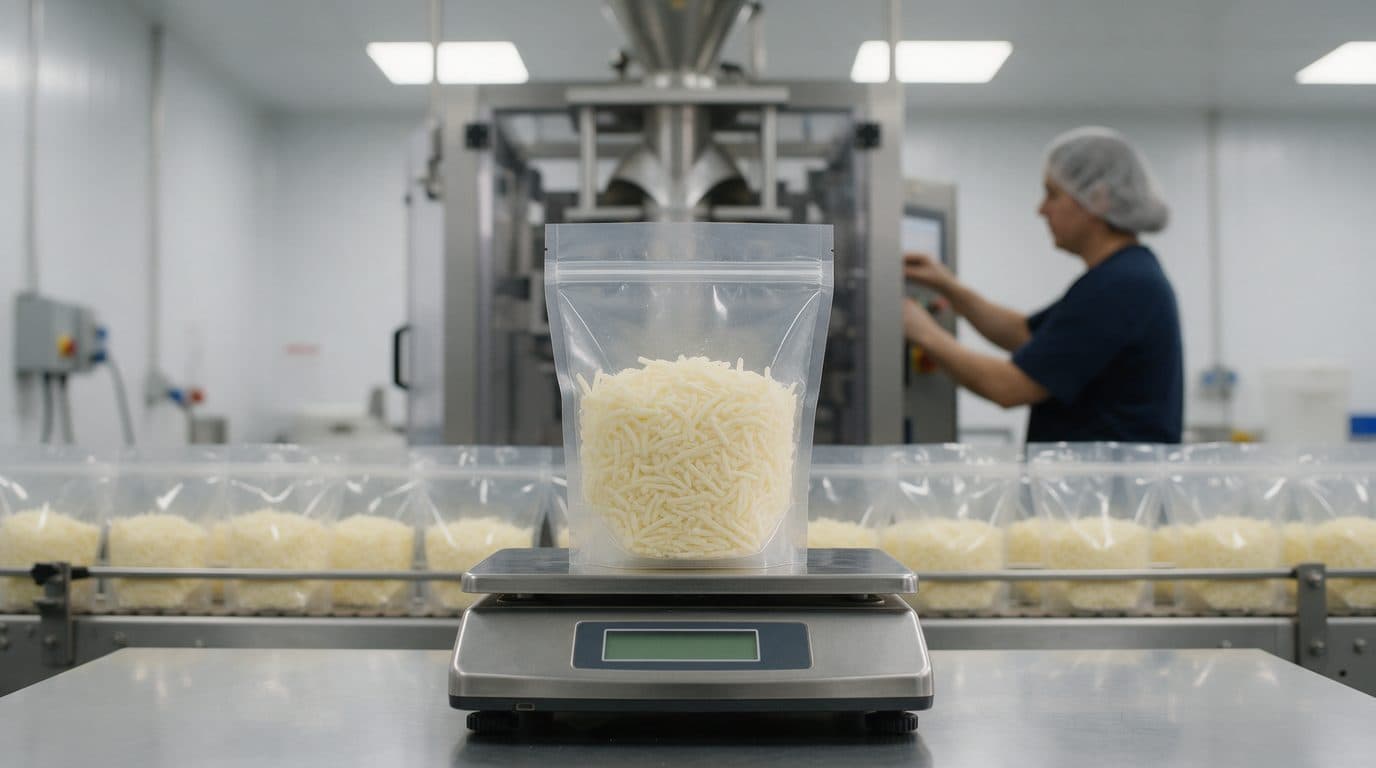
A bag comes off the scale at 241 g on a 250 g product. Everyone on the line knows it is a hold. The argument starts one minute later: how much of what is already wrapped, palletized or on a truck is affected?
Plants that answer from memory tend to err in two directions. Some hold the whole shift because nobody can say where the problem started, and the plant throws away good product. Others hold two pallets because that is what fit on the floor, and a suspect case ships.
Start at the last good check
The default boundary is simple. Product made since the last reading that passed is suspect, because nothing you measured says otherwise. Product made before that reading is covered by it.
An example with round numbers. A line makes 40 cases a minute and checks fill weight every 30 minutes. The last good check was at 10:00 and the failed one at 10:30. The window is 30 minutes, so 1,200 cases are suspect. If the check interval was 2 hours, the same failure would put 4,800 cases in question.
- Write down the time of the last passing check and the time of the failed one, from the records, not from memory.
- Convert that window to units using the line rate for that product and that run.
- Add what the line made after the failed check until it was corrected and a reading passed again.
This is why the check interval is a cost decision as much as a quality one. Halving the interval halves the largest hold a single failure can cause, before anything goes wrong.
Find the product, then count it in real units
A window in minutes is not a hold. Someone has to walk the plant and find where that product is now: on the filler, on the conveyor, in a case packer, on a wrapped pallet, in the cooler, on a dock.
- 1Stop and tag what is still on the line, then take the pallets built since the last good check off the shipping list.
- 2Walk the floor, the cooler and the dock, and list each pallet or case group affected.
- 3Count the hold in the unit people handle, cases or pallets, with a location for each, and keep the count on the record.
- 4Tell whoever ships. A hold that only the quality office knows about is not a hold.
Count in units you can physically find. "About a shift" cannot be released, reworked or destroyed, and it cannot be checked by an auditor afterwards. "14 pallets and 3 cases, listed by location" can.
Shrink the hold with evidence, not hope
Once the window is held, you can make it smaller, but only with new measurements. Two tools do most of the work.
- Re-test before you decide. A bad reading can be a bad sample, a dirty scale or a mis-keyed number. A repeat on fresh product from the same point settles that in minutes, and it should be recorded whether it passes or fails.
- Walk back with samples. Pull product from the held window, working backwards from the failed check toward the last good one. The first sample that passes draws a new, tighter boundary, and everything after it stays held.
Where the plant uses an acceptance sampling plan, such as an AQL plan, the plan decides how many units to pull and how many defects are tolerated. Use the plan your customer or your quality system names, and confirm the details with whoever owns that document.
Decide, sign and learn from it
Held product ends in one of three places: released, reworked or destroyed. Each count should be written down, by a named person, with the reason, and the total should add up to what was held.
Then close the loop that made the hold necessary. A worn seal, a drifting filler or a rushed changeover will fail again next week. Put the cause on the same record, and read the CAPA article if the fix keeps coming back as a repeat.
If the failed reading was a fill weight, the weight curve will usually show the drift an hour or two before the failure, which is when a cheaper hold was still available.
How totalMOS handles it
In totalMOS, each test counts down against its own interval on the iPad and the web, so a late check shows in red before the window grows. An out-of-spec reading opens a non-conformity before the check can close, the supervisor counts the hold in the plant’s own units, bags, cases, pallets or kilograms, the AQL disposition is recorded, and the corrective action and any CAPA sit on the same record, with the audit trail behind it. The dairy demo plant shows a failed seal putting pallets on hold.
Frequently asked questions
How much product should I hold after a failed quality check?
Everything made since the last check that passed, until new evidence says otherwise. Find where that product is now, count it in cases or pallets, and shrink the hold only with a documented re-test or samples.
Can I release held product after a re-test passes?
A passing re-test can show the first reading was wrong, but it should be recorded and approved by the person who owns the release decision. If the failure was real, release only what samples or inspection support.
How often should in-process checks run to keep holds small?
Often enough that the product made in one interval is an amount you could afford to hold. Work it out from the line rate: the interval multiplied by the rate is the largest hold one failure can cause.