Cans, PET and cartons: syrup room, carbonation, fill and pasteurise.
Every can filled, carbonated and coded to spec.
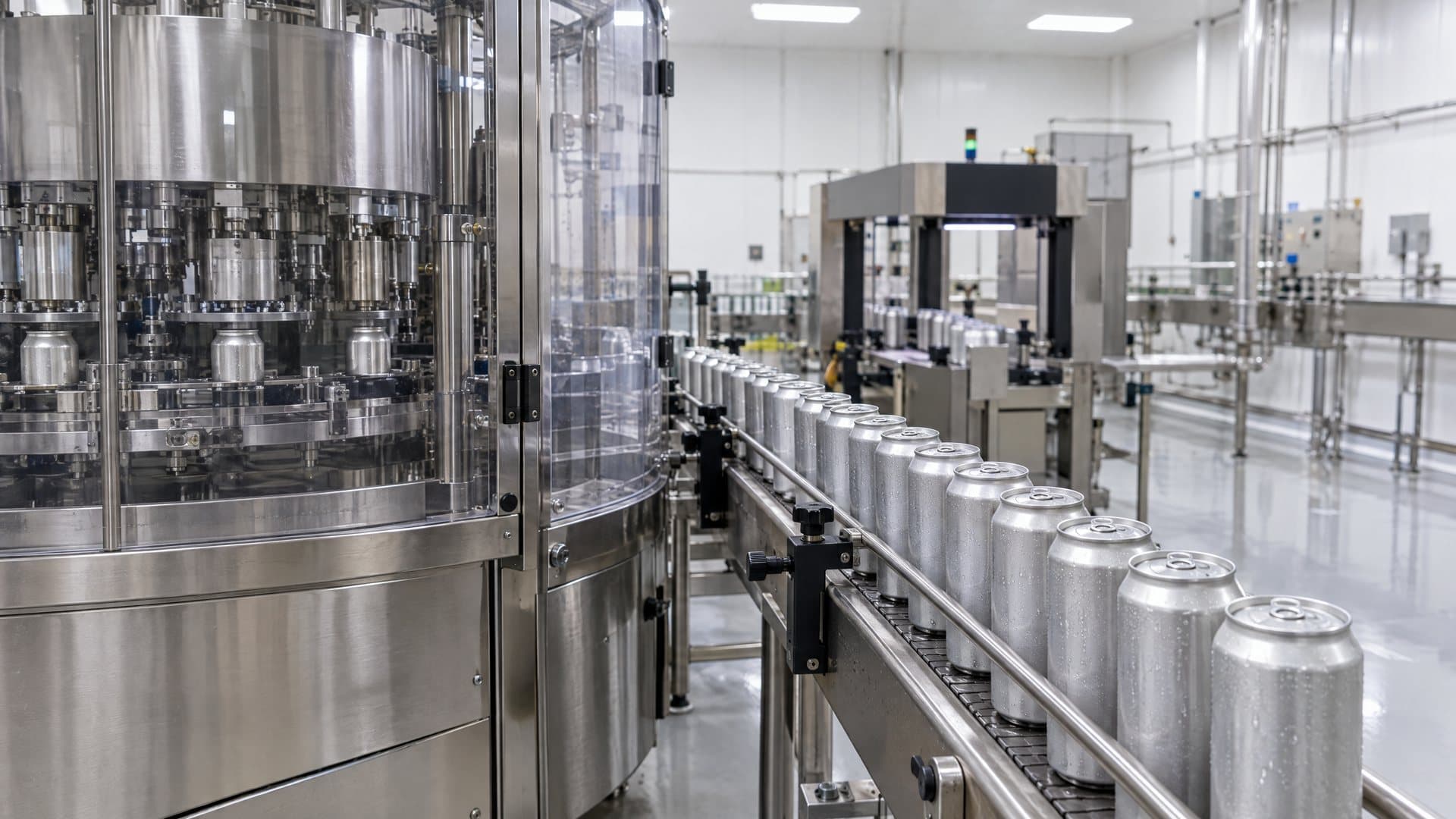
totalMOS runs a beverage plant from the syrup room to the palletiser: the syrup weighed out against the formula, fill volume, Brix and carbonation checked on time at the filler, pasteurisation and closures on their own clocks, and every failed reading taken to closure.
Where a beverage line loses product
The syrup room decides the run
A tank of syrup made to the wrong ratio is thousands of cans out of spec before the first Brix reading. When the weigh-out is a printed sheet, nobody can prove what went into the tank.
Fill and carbonation drift at speed
A filler running hundreds of cans a minute drifts, and carbonation moves with temperature. A late check means a pallet already wrapped, and a check on paper means nobody sees the trend.
Every format is its own spec
A 330 ml can, a 500 ml PET bottle and a 1 L carton each have their own fill volume, closure and seal test. One paper form for all of them is where the wrong limit gets read.
How totalMOS runs a beverage line
Brix, carbonation and fill at the filler
Fill volume, Brix, carbonation and dissolved oxygen each count down on the iPad at the filler, with cap removal torque, the seal leak test and pasteurisation units on their own clocks. Every reading is judged against that product’s limits the moment it is typed.
Syrup weighed out against the formula
A batch order turns the product’s formula into the mass of every ingredient for the tank. Two people sign before anything goes in, and the sheet keeps the formula it was struck from.
A failed seal holds the pallets
An out-of-spec reading opens a non-conformity before the check can close. The hold is counted in cans, bottles, cases or pallets, the AQL disposition is recorded, and the mechanic records the fix on the same record.
Fill giveaway, by filler
The weight curve of every production order shows its fill volumes against the target, and the Pareto shows which filler and which defect type drive the out-of-spec readings.
The checks on the line
The demo beverage plant ships with the checks a filling line runs, from fill volume to pasteurisation units. Your own tests, limits and frequencies replace them.
- 50 products, each with its own limits
- Holds counted in cases, pallets, cans, or bottles
| Check | Default spec | Sample | Frequency |
|---|---|---|---|
| Fill volumeWeight curve10 samples · Every hour | 328-338 mL | 10 samples | Every hour |
| Brix5 samples · Every hour | 10.2-10.8 °Bx | 5 samples | Every hour |
| Carbonation5 samples · Every hour | 2.6-3 volumes | 5 samples | Every hour |
| pH3 samples · Every 2 h | 2.8-3.4 pH | 3 samples | Every 2 h |
| Titratable acidity3 samples · Every 4 h | 0.1-0.16 % | 3 samples | Every 4 h |
| Dissolved oxygen3 samples · Every 4 h | 0-0.3 ppm | 3 samples | Every 4 h |
| Cap removal torque5 samples · Every 2 h | 12-20 lbf·in | 5 samples | Every 2 h |
| Seal leak test10 samples · Every hour | Pass | 10 samples | Every hour |
| Clarity5 samples · Every 2 h | Brilliant, Clear | 5 samples | Every 2 h |
| Date code legibility5 samples · Every 2 h | Pass | 5 samples | Every 2 h |
| Pasteurisation units1 sample · Every 4 h | 15-40 PU | 1 sample | Every 4 h |
| Date code1 sample · Every 2 h | Best-before, counted from the shelf life | 1 sample | Every 2 h |
Frequently asked questions
Can a check be left off products it does not apply to?
Yes. A still water is not carbonated and a can has no screw cap, so those checks are left off those products instead of failing on every run. Each product carries only the checks that apply, with its own limits for each.
Does each format get its own fill spec?
Yes. A product is the drink in a format, so a 330 ml can and a 500 ml bottle of the same cola carry their own fill volume limits and their own target for the weight curve.
Can it record pasteurisation?
Pasteurisation units are a check like any other, with a minimum, a maximum and their own countdown. A tunnel running cold opens a non-conformity on the reading that shows it.
How are date codes checked?
The date code is a best-before counted from the product’s shelf life, and date code legibility is its own pass-or-fail check. A coder set to the wrong date fails on the first reading.
Other industries
See it with your own formats.
Thirty minutes, with your drinks, formats and specs set up before the call.
Book a demo