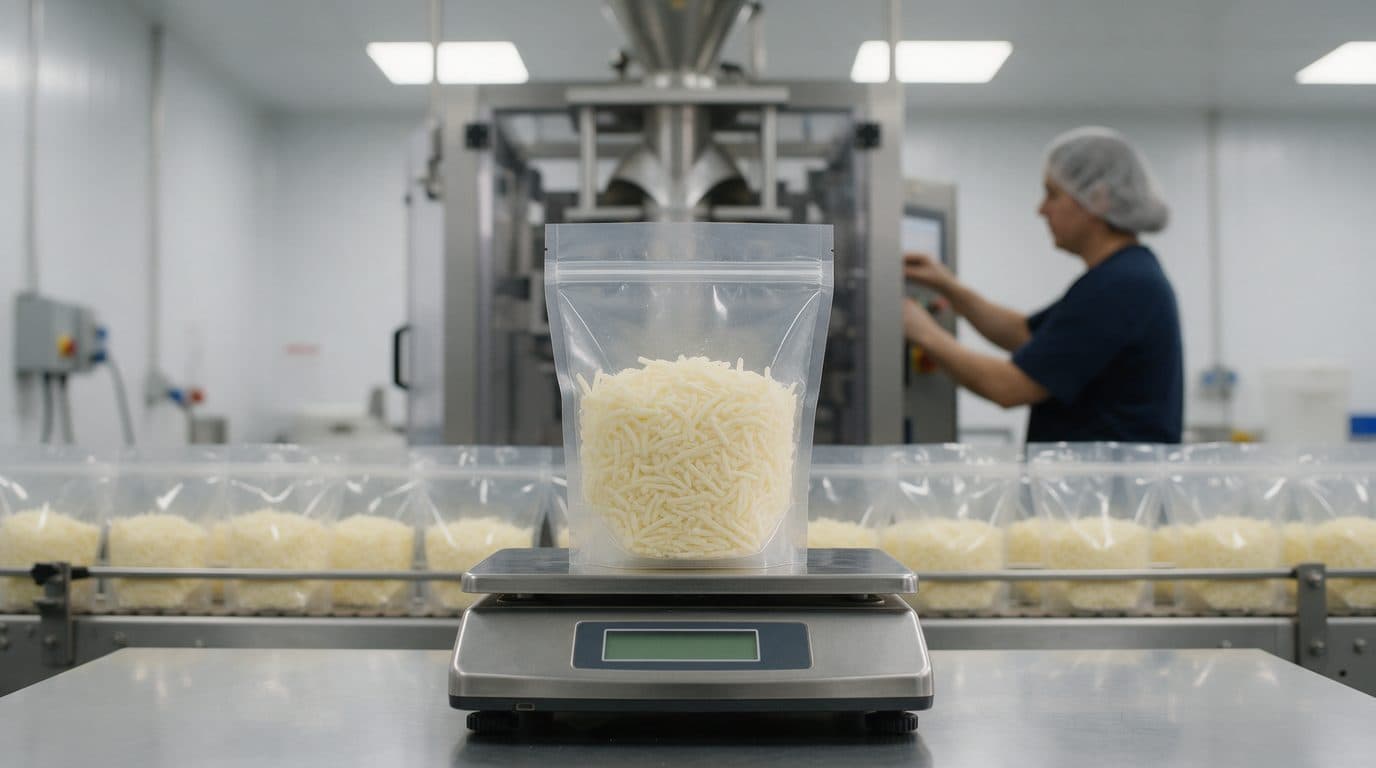
From paper check sheets to a quality record an auditor can read
A clipboard records what someone wrote, not when they measured it. What an auditor actually asks for, and how to move in-process checks off paper without disrupting the line.
The totalMOS team4 min read
Key takeaways
- A paper sheet cannot tell a reading taken at 10:00 from one written at 10:55.
- Auditors ask three things: was each check done on time, was it in spec, and what happened when it was not.
- A digital record answers them by design: a timestamp at entry, a verdict against the spec, and a non-conformity that cannot be skipped.
- Move one line first, keep paper as the fallback for a few weeks, and retire it when the record holds.
What a clipboard cannot tell you
A paper check sheet is a record of what someone wrote. It is not a record of when they measured, whether the value was in spec when they wrote it, or what happened next. Most of the time that gap does not matter. On the day of an audit, a complaint or a recall, it is the whole question.
- Late checks are invisible. A reading due at 10:00 and written at 10:55 looks exactly like one taken on time.
- Back-filled readings look real. Six identical values in the same handwriting, filled in at the end of a shift, are indistinguishable from six honest ones.
- Out-of-spec values sit unanswered. A weight below the minimum is circled, sometimes, and the sheet has nowhere to say what was done about it.
- Nothing trends. The weights are on forty sheets in a binder. Nobody draws the weight curve, so nobody sees the drift.
What an auditor actually asks
Whatever the scheme, an auditor reviewing in-process checks comes back to the same three questions for a lot they pick at random:
- 1Was every check done, and on time? The frequency in your plan against the times in your record.
- 2Was each result within the specification? The limits in force for that product on that day, against the values recorded.
- 3When a result was out, what happened? The product put on hold, the disposition, the corrective action, and who signed each.
On paper, answering these means pulling the right binder, reading handwriting, and hoping the non-conformity form was stapled to the right sheet. The answer is usually there. It is slow to find and hard to prove.
What a digital record changes
A digital record is not a scanned check sheet. It changes what is captured at the moment of the check:
- A timestamp at entry, set by the system rather than written by hand, so a late check is visibly late.
- A verdict against the spec, computed from the product’s own limits the moment the value lands, so nobody has to remember them.
- A countdown per check, so the line sees a check coming due before it is late, not after.
- A non-conformity that cannot be skipped. An out-of-spec value opens one before the check can close, with the hold and the corrective action in the same record.
Moving off paper without stopping the line
- 1Start with one line and the checks that matter most: fill weight, seal integrity, the metal detector, the date code, and the pre-start checklist.
- 2Enter each product’s limits once, so every reading is judged against the spec instead of the operator’s memory.
- 3Mount the tablet where the check is made, not in the office. A check that needs a walk gets done late.
- 4Keep the paper sheet as the fallback for a few weeks, and compare the two records at the end of each shift.
- 5Retire the paper when the digital record is complete for a week of production, then move to the next line.
The Wi-Fi at the far end of the plant will drop. Plan for it: the tablet should keep the reading with the time it was taken and send it when the connection returns, rather than lose it or block the operator.
How totalMOS handles it
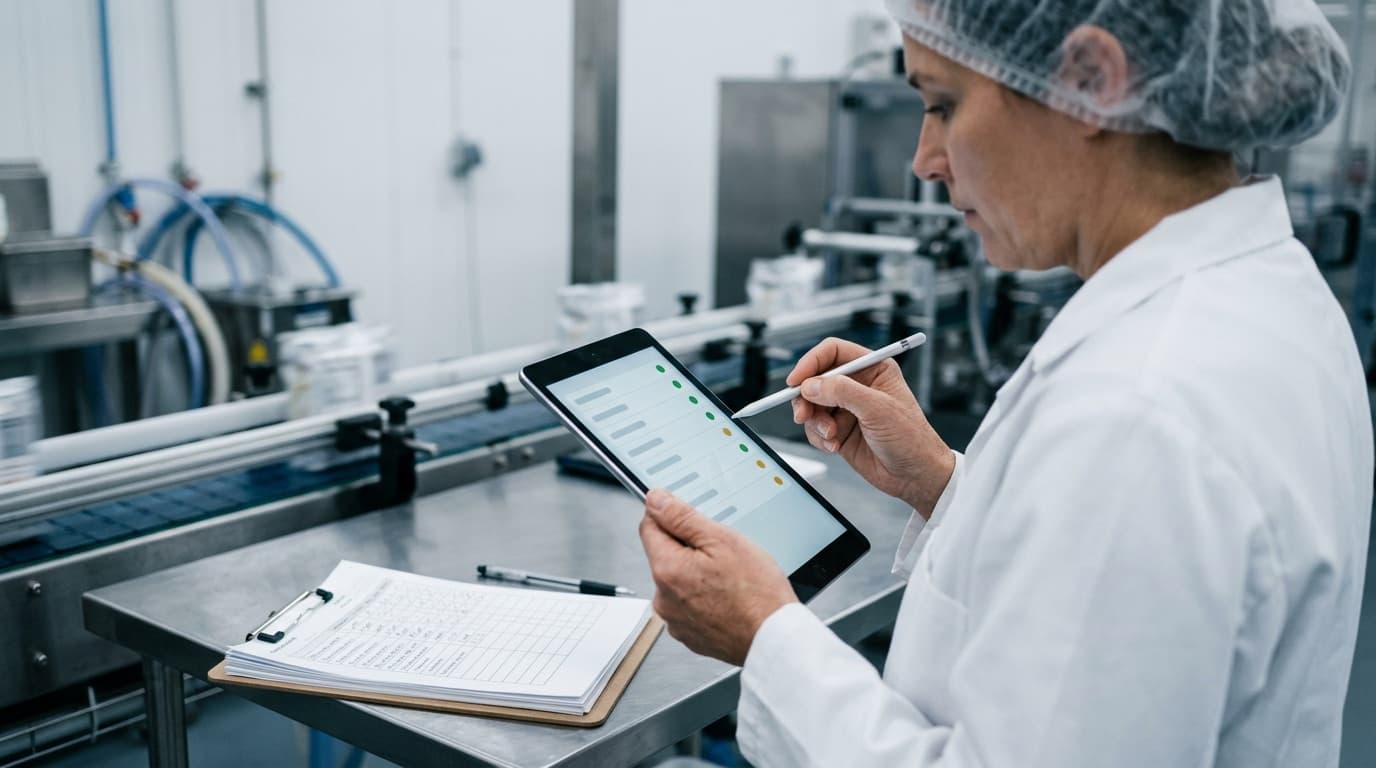
totalMOS replaces the check sheet with an iPad app at the line and a web app in the office, reading and writing the same record. Each test has its own countdown, amber before a sample is due and red when it is late; each value is judged against the product’s spec as it lands; and an out-of-spec reading opens a non-conformity before the check can close. When the tablet loses Wi-Fi, the reading is kept on the iPad and sent when the connection returns, and the record keeps both the time it was taken and the time it reached the server.
Frequently asked questions
Are digital quality records accepted by auditors?
Yes. Food safety schemes ask for records that are complete, legible, dated and retrievable, not for paper. A digital record with system timestamps and an audit trail is usually easier to verify than a binder.
What happens if the tablet loses its connection?
A well-designed app keeps the reading on the device with the time it was taken and sends it when the connection returns, so nothing is lost and the record shows that it arrived late.
How long does it take to move a line off paper?
A few weeks per line is typical: a short period running paper and digital side by side, then retiring the paper once the digital record is complete.